

Pre-K – Grade 4 Curriculum
Explore our Pre-K through Grade 4 Curriculum
Each school year, we select a new theme for our core curriculum that reflects the needs of our learners and helps them form connections across subjects and grade levels. Examples of past years’ themes include Design, Then Build and Windows and Mirrors.
Literacy
Pre-K Literacy Development focuses on laying a strong foundation for reading and writing skills that students will continue to build on throughout their education. Throughout the school year, children will practice the alphabet, learn to identify both uppercase and lowercase letters and begin to associate each letter with the corresponding sound. Teachers regularly read aloud a variety of stories, exposing children to different genres, themes, and vocabulary. Our Pre-K teachers create an engaging and interactive literacy environment where children actively participate in learning and begin to see themselves as readers and writers.
Math
Math in Pre-K is explored through fun, hands-on activities that engage learners in early mathematical exploration. Pre-K students begin by developing a strong number sense, which includes recognizing and understanding numbers, counting, and identifying the relationships between numbers. Number stories (simple word problems) are introduced to help children connect mathematical concepts to real-world situations, fostering their ability to apply math to everyday life.
Literacy
Kindergarteners spend the year cementing their knowledge of letters and sounds and then use that knowledge to inform their beginning reading and writing skills. Kindergarteners then use their burgeoning reading skills via our book clubs. Students are also exposed to phonics, including learning which letters are vowels and which are consonants. When reading in small groups, students use strategies such as picture clues, tracking words with “pointer power,” tapping out CVC words and practicing reading aloud with and to their peers. Kindergarten students also spend time exploring letter writing and using poetry to write creatively, and class read-alouds continue to be a pervasive source of deeper thinking and literacy skill practice.
Math
Kindergarten math focuses on practicing patterns with colors, objects, and shapes. Students build number sense through subitizing, using math tools like ten frames and number lines, and comparing numbers. Through the Investigations curriculum, kindergarten explores place value to the hundreds place (with time focused specifically on teen numbers), the difference between plane and solid shapes, and the basic number operations of addition and subtraction through story problems and understanding the +/- symbols.
Literacy
First graders begin the year by studying phonics through the review of short vowel sounds and closed syllable words. Once this concept has been solidified, the students move on to long vowel sounds, open syllables, and silent e-syllable words. First graders spend time strengthening phonological awareness skills, and learning digraphs, sound teams, sight words, and exceptions. They spend time during their small literacy groups focusing on both reading comprehension and phonics skills.
Math
Through the Investigations curriculum, first grade students begin the year refreshing number sense by using math tools including ten frames, number lines, connecting cubes, and base ten blocks. First graders then move into story problems with addition and subtraction and are given strategies to break down language and determine how to solve each problem. Students also spend time on measurement, fractions, modeling data, and 2D and 3D geometry throughout the year.
Social Studies
At the beginning of the school year, first-grade students discuss what it means to be a community member and how they can best create a positive community in the classroom. This transitions into the first social studies unit of Responsible Citizenship in which students discuss rules, laws, respect and responsibility, friendship, honesty, perseverance, sportsmanship, and more. Beyond this, students study American culture and rights including American symbols, the pledge of allegiance, voting, presidents of the past, and Native American culture and history.
Literacy
With direct teaching, practice, and review, second graders continue building their fundamentals of phonics to support their reading and spelling skills. Reading instruction explores both fiction and non-fiction literature throughout the year to help students identify the tone and text features that differentiate the two types of work. Students also practice writing skills, including parts of speech, prefixes and suffixes, and applying rules of capitalization and punctuation.
Math
In second grade, students develop their addition and subtraction strategies within a hundred, work on story problems including those with an unknown start and an unknown change, and establish the foundations of multiplication by grouping objects and applying skip counting skills. Other math topics that are explored throughout the school year include shapes, fractions, linear measurement, and data collection and representation. Students will also gain the tools they need to articulate their mathematical reasoning.
Social Studies
Second graders explore current and historical events including, the Civil Rights Movement, efforts to win and exercise the right to vote for a variety of marginalized communities, and the important role of voters and voting in a democracy. Students then focus on applying what they have learned about culture and identity to our school and our classroom communities by participating in several service projects meant to benefit our Lower Campus community.
Literacy
Third graders read a variety of genres and are instructed to take notes on the characters, setting, problems, solutions, and morals of the stories. Using these notes, the students write summaries and add their own personal responses. Students also pick a non-fiction topic of interest and complete an in-depth unit of study on their chosen topic. Within this unit, students create a book composed of a dear reader page, dedication page, table of contents, index, glossary, references, and an about the author page. The body of the book includes non-fiction essays, fictional stories, and poems.
Math
In third grade, students learn place values up to the hundred thousands place and learn to write numbers in standard, expanded, and written form. They learn how to solve multiplication and division word problems that include multi-steps and possible remainders. Students also practice creating square and rectangular arrays with shapes that apply to finding the area of regular and irregular shapes. Two-dimensional shapes and three-dimensional figures are also introduced throughout the year. The students will learn how to identify fractions and compare fractions with common denominators.
Social Studies
Students learn about the world around them through maps, current events, and historical events. They are introduced to different cultures and traditions by observing significant dates such as Mexico’s Day of the Dead, Indigenous People’s Day, and Chinese New Year. Students also read texts about influential people throughout history and discuss the challenges they faced and the impact they had on the world.
Literacy
In fourth grade, students hone their research skills and practice synthesizing and citing sources. They are also introduced to figurative language such as similes, metaphors, personification, onomatopoeia, hyperbole, and alliteration. These literary devices allow them to build their reading, writing, and vocabulary skills. In writing, they develop an understanding of the five-paragraph essay structure by using a thesis to frame their opinion and supporting reasons. Finally, students combine reading, writing, and social studies skills in two interdisciplinary independent projects that highlight their individual creativity.
Math
Fourth grade students explore multiplication, division, and geometry throughout the school year. They focus on linear measurement and learn units of measurement such as centimeters, inches, and feet as well as building on the concept of the array model to begin solving area and perimeter problems. Students practice drawing, measuring, and identifying angles using a protractor and adding and subtracting angles of polygons. Next, students study fractional parts of shapes, compare and order fractions on a number line, and find equivalent fractions. They also learn how to add and subtract fractions and convert improper fractions into mixed numbers. This knowledge leads into an introductory study of decimals.
Social Studies
Fourth grade students begin the year by studying the five primary world religions (Islam, Hinduism, Judaism, Buddhism, and Christianity). Through reading and discussions, students work to understand how religion is part of identity. Fourth graders also complete a study on change makers through two interdisciplinary long-term projects. Students are introduced to well-known change makers and define which of these figures resonates with them. Students use their reading, writing, and research skills to complete an independent project of their choice as well as a change maker project. Student creativity is at the forefront as the fourth graders demonstrate that they can successfully integrate the foundations they’ve been taught over the course of the year.
In addition to our core curriculum, each grade of IMS students explores their love for learning through weekly movement, music, art, reading, language, and science classes taught by our talented team of specialty staff and faculty.
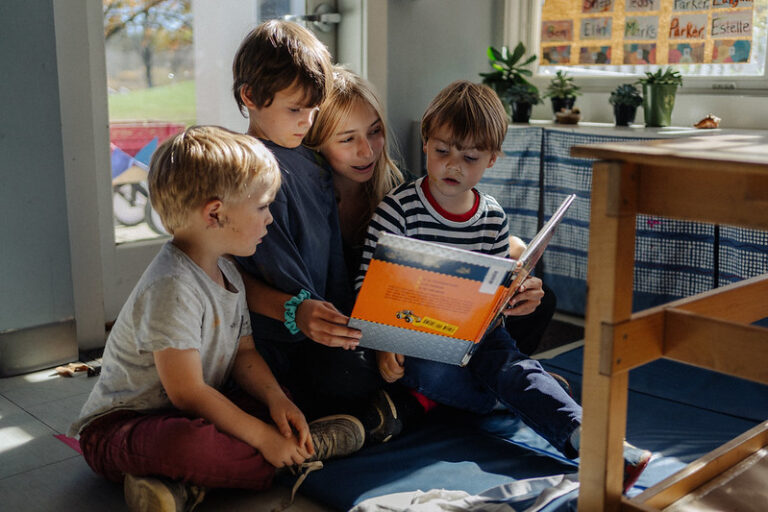
Lydia Woodard
LOWER SCHOOL LIBRARY MANAGER & LITERACY INSTRUCTOR
“I strive to inspire a love for reading and guide students toward self-discovery while embracing their diverse interests and backgrounds. My goal is to enhance understanding and foster appreciation for cultural diversity through literature, encouraging critical thinking and engaging discussions. It is my hope that the library serves as a safe and magical space where students can experience the joy of storytelling and develop essential skills for seeking knowledge.”
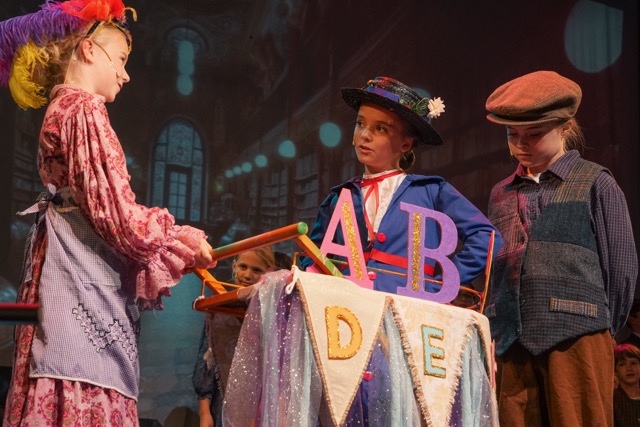
Michael Baldwin
LOWER SCHOOL PERFORMING ARTS
“My goal is to teach my students the power of collaboration, confidence, and empathy through the Performing Arts, helping them grow both as individuals and as part of a supportive community.”
Kiana Johnson
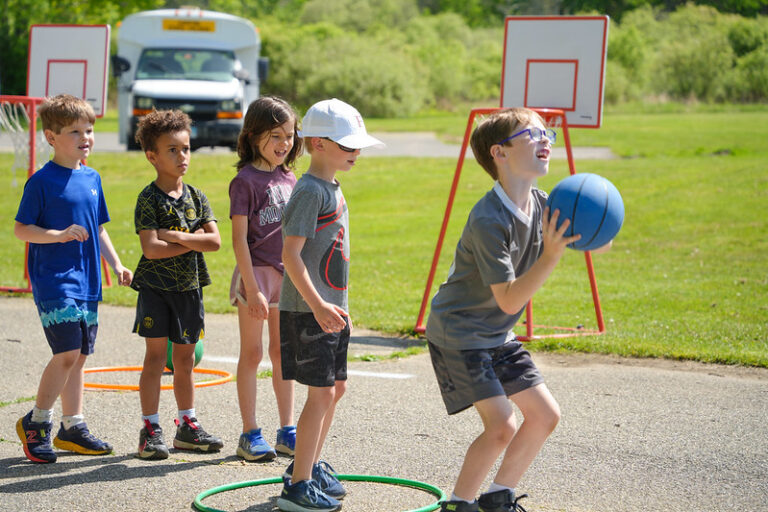
PHYSICAL EDUCATION INSTRUCTOR
“During our classes, we focus on fun, cooperative games that encourage students to work together while enhancing their physical abilities. My goal is for every child to find joy in physical activity and feel confident moving with others.”
Enrichment Programs are also offered throughout the school year, including: Chess, Creative Movement, Cooking, Soccer, Lacrosse, Dance, Pottery, and more. Students sign up for enrichment programs before the start of each season. For detailed information regarding offerings this term, please contact Amanda Halloran.