

Written by Alex Weyerhaeuser
Upper Campus Science & English Teacher
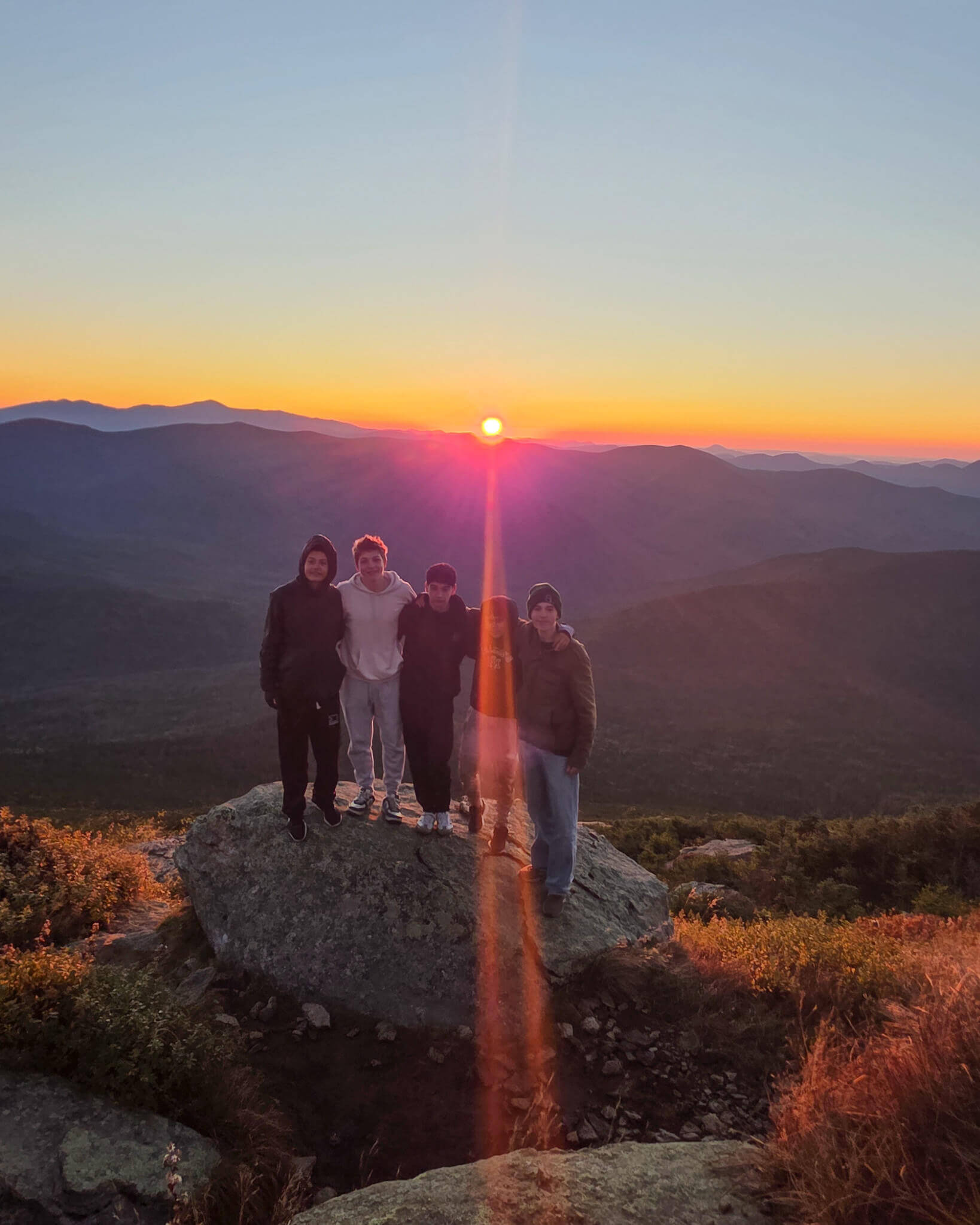
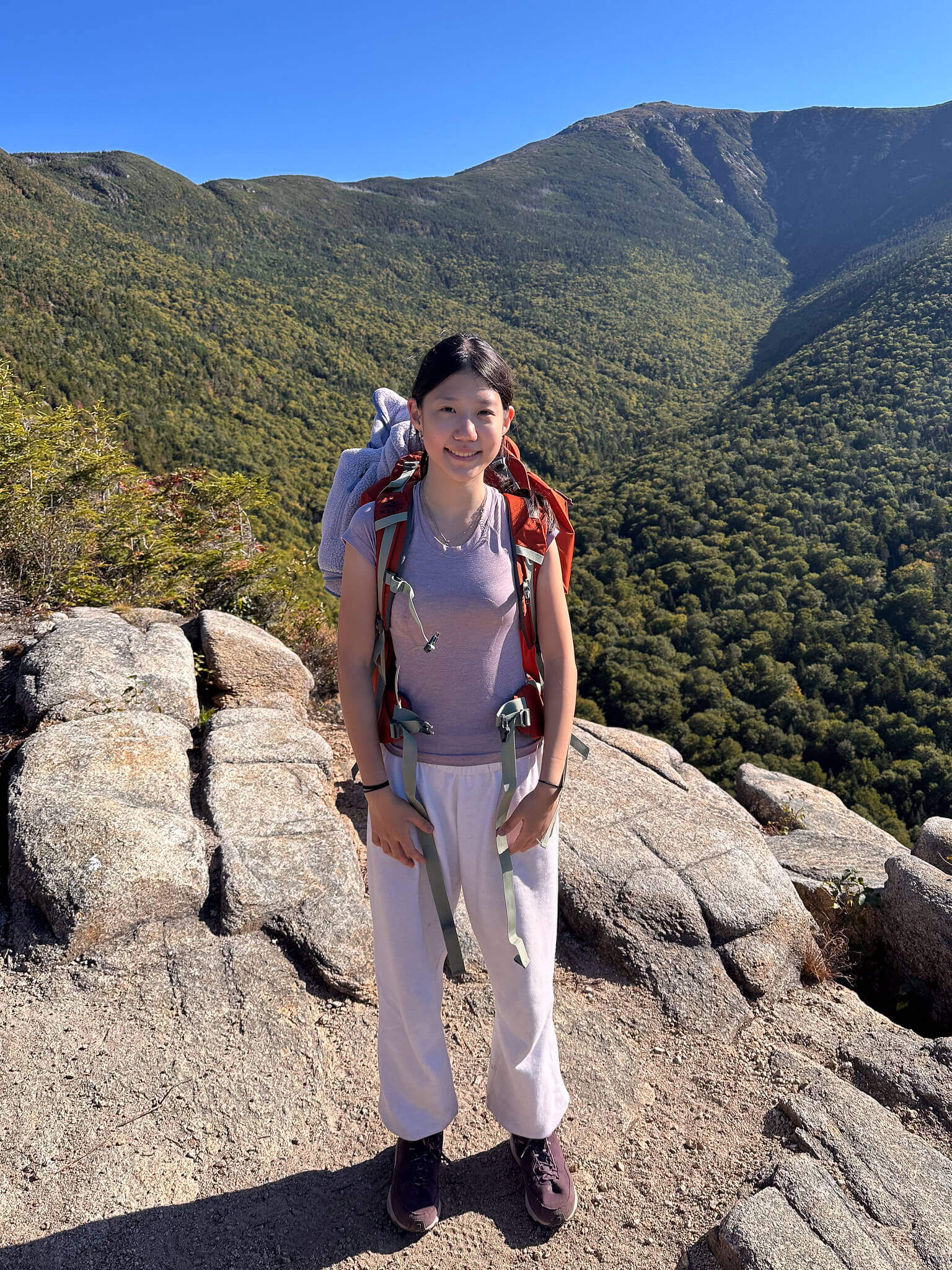
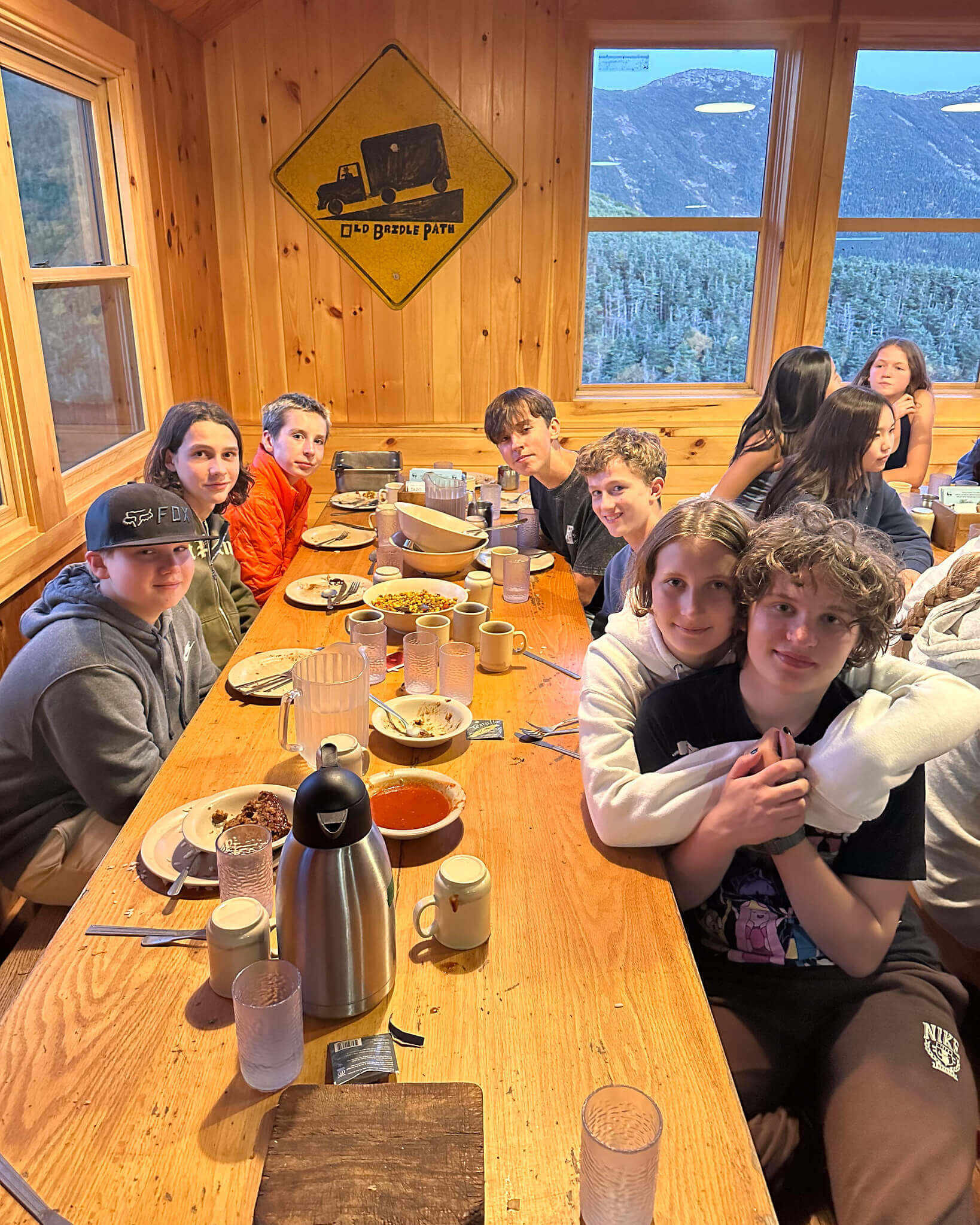
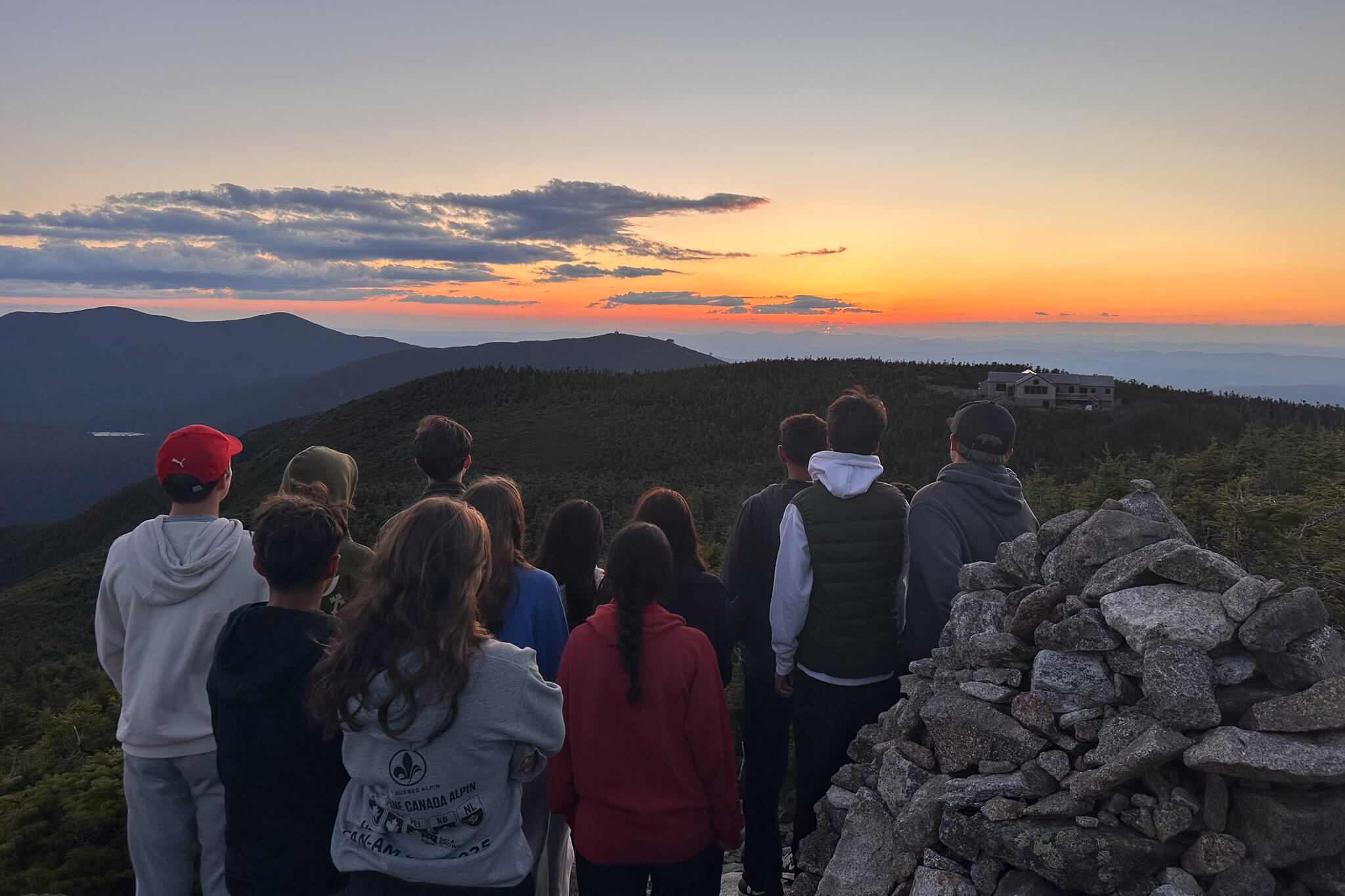
On Wednesday, September 10, IMS ninth graders rose to the challenge of stepping up as the school’s newest leaders as they embarked on their three day backpacking trip in New Hampshire’s White Mountains. They followed in the footsteps of past ninth graders—sometimes literally, as they borrowed hiking boots from IMS that have weathered many Outdoor Adventure and Education (OAE) trips. With only two days of classes under their backpack belts, in which they began to examine living and nonliving components of ecosystems in biology and to reflect on their own meaning of home to better empathize with Odysseus’ plight in English, these ninth graders set sail on their own odysseys. After a five hour drive, the class divided in two, with one group hiking up to Lonesome Lake Hut and the other to Greenleaf Hut, both run by the Appalachian Mountain Club (AMC).
While the bulky backpacks, rocky terrain, and unfashionable boots posed obstacles, and for many students, this was their first time hiking while carrying so much weight, they met the challenge with positivity. Settling into our own walking paces, smaller groups emerged as we trekked through the spruces, firs, and pines. Chatter, laughter, and guessing games to pass the time tittered through the woods with the chickadee songs and afternoon sunlight as we walked. I couldn’t help but reflect that the timing of this trip was perfect.
At the start of the ninth grade year, students spend time examining their own identities and their connection to the broader world. In the days leading up to their backpacking trip, these ninth graders spent English class time walking outside, noticing details about our campus: the sudden sound of birdsong when we reached the field behind Doolittle dorm, the sharp smell of goldenrod leaves by the solar fields, the hidden yellows, blacks, and purples in all the greenery around the ponds. They used a biological lens to learn about how life functions in ecosystems at both large and small scales. In their history classes, they examined identity and power. These classes thematically complement each other, their capstone Poquonook Solutions Project (PSP) focuses on personal reflection and making a contribution to the sustainability of our community, and the entire curriculum centers around what it means to be part of an interconnected ecosystem. In these opening days, they began to reflect on how their senses of home and community shape the ways they care for the world around them—a question they will revisit and build upon all year and, hopefully, the rest of their lives. When they embarked on their trip, therefore, they were primed to notice the smell of pine needles around them just a little more, be a little more aware of the energy exchange between our lungs and the trees, and think a little more deeply about what kind of people they want to be in our community—even subconsciously.
In group discussions, some students felt confidence in their roles as prefects and student council representatives, as well as doubts about their own leadership abilities. We reflected on the ways in which we can create a positive impact on others quietly or by example, and the settings in which we may not yet be ready to guide others. Many of these students are still growing into their ninth grade selves, but while I watched them explore the woods for three days, climbing mountains with determination and joy, drawing their peers into group games with compassion, respecting each other, the other guests at the huts, and the land around them, and traveling through the space between childhood and young adulthood, I was confident that this group will step up as role models just as past ninth grade classes have before them.
Much of the time on this trip was unstructured and, being away from their phones, technology, and comforts of their daily lives, these students impressed their teachers with their creativity for entertainment. Enjoying the sparkling Lonesome Lake, waking up before dawn for a sunrise hike, throwing around a ball of socks, playing endless games of Uno, Truth-or-Dare, and Twenty Questions, these ninth graders bubbled with positive energy in the long tradition of childlike joy and creativity that comes from spending time outside in community away from screens.
The joyful reunion between the two groups at the trailhead might have been heard back up at the huts, as students were eager to share stories about the views, hikes, and silly skits put on by the AMC hut crews. Though they have now returned to their school routines, homework, and computers, this trip deposited a foundation of camaraderie, community, and interconnectedness with one another and the broader world that these students will continue to build upon in their final year at IMS and beyond.