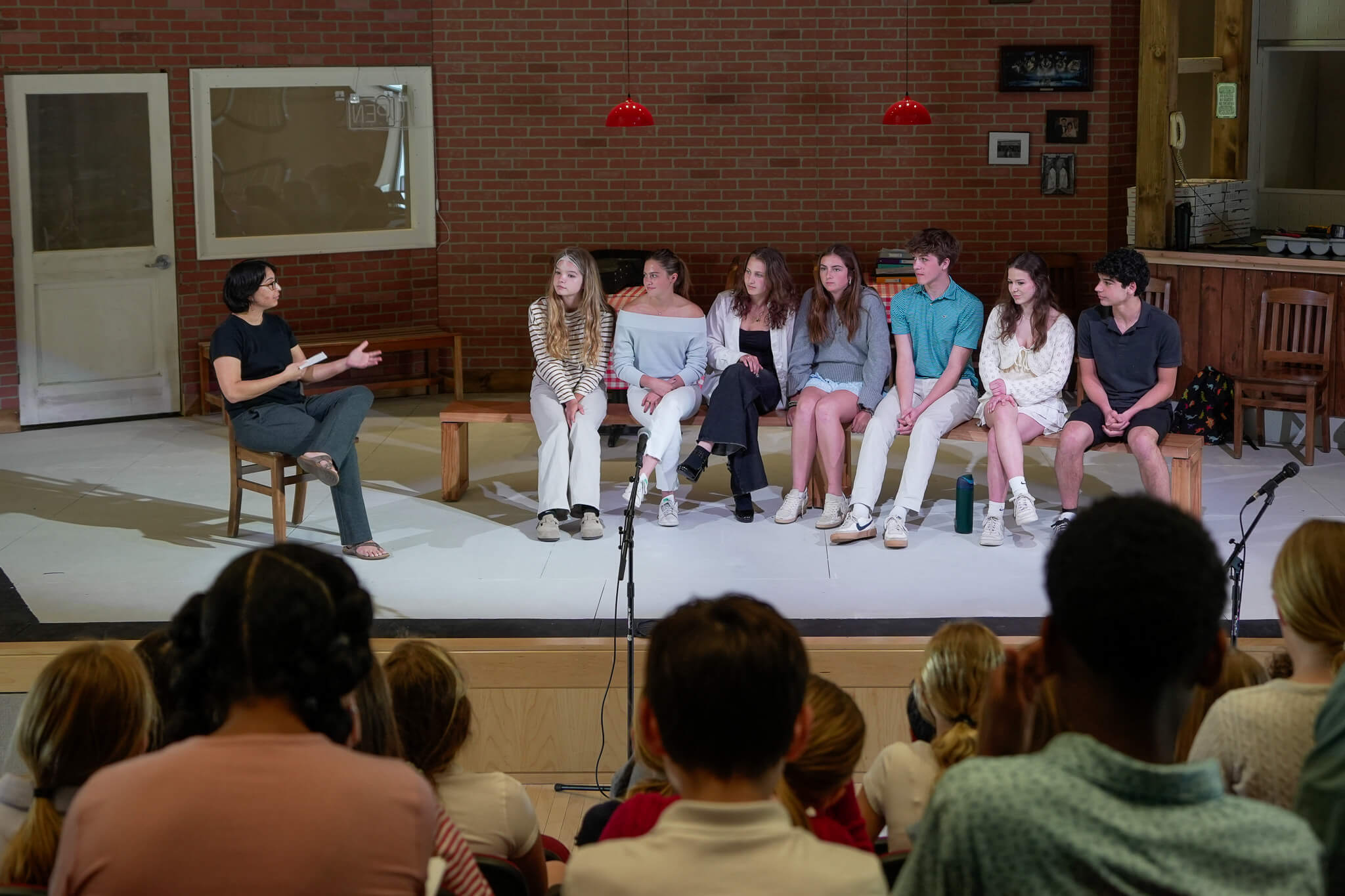
In a recent Health and Wellness class, Ms. Yasumura led a panel with IMS ninth graders for students in fifth and sixth grade to discuss their personal journeys with tech use and social media.
Ms. Yasumura opened the discussion by asking the ninth-grade panelists to describe their technology habits. Students admitted that screens often serve as an escape for them from schoolwork or stress. However, that time they spend “doomscrolling” is just a quick relief. They all agreed that establishing screen time limits is a difficult, but necessary step in developing healthy habits. Several panelists noted that parental controls, which they once viewed as a nuisance, now feel like helpful boundaries that prevent them from falling into addictive algorithms. “Trust the process. Parents want the best for you, and eventually, you’re going to be thankful you’re not addicted to your phone.”
When asked about the “ideal age” to start using social media, most students suggested ages thirteen or fourteen as a starting point, noting that by this age, they felt mature enough to handle the complexities of the digital world. Additionally, some shared success stories of starting with older devices or limited-capability phones, which allowed them to stay connected without being consumed by social media or other addictive platforms.
The panel then took a deep dive into the “Fear Of Missing Out” (FOMO) and the psychological toll of comparing one’s life to a curated feed. Students highlighted that a single photo of someone doesn’t show the full story, and you never know what could be going on behind the scenes. The group emphasized that social media often reinforces a false sense of what a “good life” looks like, leading to unnecessary stress.
“You won’t remember the time you spent scrolling, but you will remember the ‘side quests’—the random adventures and time spent with friends.”
The session concluded with rapid-fire tips for their peers, reinforcing that digital media can be a positive tool for connection and information, but don’t let it replace the vivid, unpredictable experiences of real life.